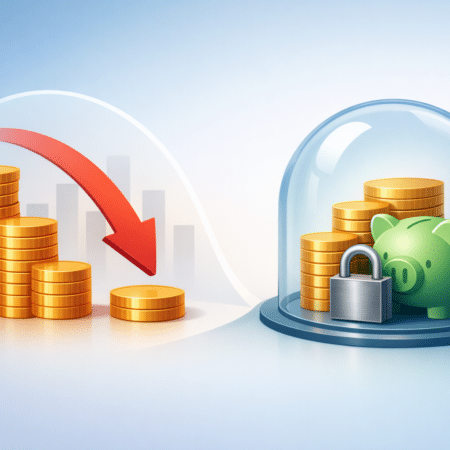



Scope: UK-wide. ISA rules apply across England, Wales, Scotland, and Northern Ireland. Policy position reflects confirmed changes following the November 2025 Budget and January 2026 updates.
TL;DR
- From April 2027, the Cash ISA allowance falls from £20,000 to £12,000 for most people.
- People aged 65+ keep the full £20,000 allowance.
- 2026 is the last full year to shelter large sums under current rules.
- Money placed into an ISA stays tax-free permanently.
- This is a structural tax change, not a short-term rate issue.
What Is Changing in April 2027?
At present, adults can put up to £20,000 per year into ISAs.
From April 2027, the government will introduce a two-tier Cash ISA system:
- Under 65: allowance reduced to £12,000
- 65 and over: allowance remains £20,000
This creates a permanent £8,000 annual gap for millions of savers.
The change was confirmed following sustained campaigning by Martin Lewis, who argued that older savers rely more heavily on cash income in retirement.
Why This Is a Bigger Deal Than It Sounds
An £8,000 cut may not feel dramatic — until you project it forward.
What You Lose Over Time (Under 65)
If you normally save £20,000 per year:
- You lose £8,000 of tax-free shelter every year
- Over 10 years, that is £80,000 exposed to tax
- All future interest on that money becomes taxable
Once an ISA year passes, you can’t go back and fix it.
Why 2026 Is the “Last Big ISA Year”
The ISA Lock-In Effect
Money placed inside an ISA:
- Remains tax-free for life
- Can be transferred freely between providers
- Is protected from future rule tightening
This makes 2026 uniquely valuable:
- It is the final year to use the full £20,000 allowance if you are under 65
- Any unused allowance is lost forever after 5 April 2026
Advisor insight:
This is not about rates or market timing. It is about banking tax-free space while it still exists.
Who Is Most Affected by the Cut?
Most Impacted
- Savers aged 40–64
- Higher-rate taxpayers
- Those planning to fund retirement with cash buffers
- Couples building joint cash reserves
Less Impacted
- Savers already using less than £12,000 per year
- People with minimal taxable savings
- Over-65s (who keep the full allowance)
How This Interacts With Savings Tax
Outside an ISA, interest is taxable above your Personal Savings Allowance (PSA):
- £1,000 (basic-rate taxpayers)
- £500 (higher-rate taxpayers)
- £0 (additional-rate taxpayers)
As savings grow, the ISA becomes less optional and more essential.
Example Calculation (Why the Cut Matters in Pounds)
Scenario: £8,000 no longer sheltered, earning 4%.
- Annual interest: £320
- Tax at 20%: £64 per year
Over 20 years:
- £64 × 20 = £1,280 lost to tax
- And that’s assuming rates don’t rise
Multiply this across multiple years of lost allowance and the cost compounds quietly.
FSCS Protection Still Applies (2026 Update)
Both Cash ISAs and savings accounts are protected by the Financial Services Compensation Scheme (FSCS).
Since 1 December 2025, protection is:
- £120,000 per person, per institution
- £240,000 for joint accounts
This means the ISA decision is about tax, not safety.
The Age 65 Cut-Off: Why It Matters
If you turn 65 on or before 5 April 2027:
- You retain the £20,000 allowance permanently
If you are 64 on that date:
- Your allowance drops to £12,000
- Even if you turn 65 later
This creates a sharp planning edge around birth dates, not income.
Common Mistakes to Avoid in 2026
- Waiting for “better rates” before using allowance
- Assuming you can catch up later
- Holding large balances in taxable savings unnecessarily
- Withdrawing ISA cash instead of transferring it
Never withdraw ISA funds to move them.
Always use the official ISA Transfer Service or you permanently lose tax protection.
Is This Financially Worth Acting On?
- Under 65, £20k+ savings: Yes, strongly
- Joint savers: Yes, compounding benefit over time
- Over 65: Still valuable, but urgency is lower
Main risk: inertia. Tax erosion rarely arrives as a bill — it leaks quietly year after year.
People Also Ask (PAA) & FAQs
Is the ISA allowance definitely being cut in 2027?
Yes. The change was confirmed following the November 2025 Budget and January 2026 updates.
Does the £12,000 limit apply to all ISAs?
The cut applies to Cash ISAs. Other ISA components may follow separate rules.
Can I use my 2026 allowance after April?
No. ISA allowances are use-it-or-lose-it within each tax year.
Do over-65s lose any ISA benefits?
No. Over-65s retain the full £20,000 Cash ISA allowance.
Can couples double their allowance?
Yes. Each adult has their own ISA allowance, even within a marriage.
Does this affect existing ISAs?
No. Money already inside an ISA remains fully tax-free.
Understanding the April 2027 rule change is critical, but it should not be viewed in isolation. To see how the allowance cut affects real-world decisions today, our cash ISA vs savings account for retirees guide shows the after-tax impact on common retirement balances. For couples and widows, the how ISA inheritance works (APS guide) explains why inherited ISAs sit outside the new limits altogether. Finally, once your strategy is clear, our analysis of the best Cash ISAs for estate planning highlights providers that support APS, transfers, and long-term planning. Read together, these guides help turn a policy change into a practical plan.

Other Articles

How ISA Inheritance Works (APS Guide – UK 2026)
Cash ISA vs Savings Account for Retirees (UK 2026 Guide)