

Scope disclaimer: This article applies to England, Wales, and Northern Ireland. Scotland uses different income tax bands and rates.
TL;DR
- UK income tax is charged progressively using bands
- Only income within each band is taxed at that rate
- The Personal Allowance is £12,570, subject to tapering
- Higher-rate tax starts at £50,271
- Income over £100,000 reduces your Personal Allowance
UK Income Tax Bands
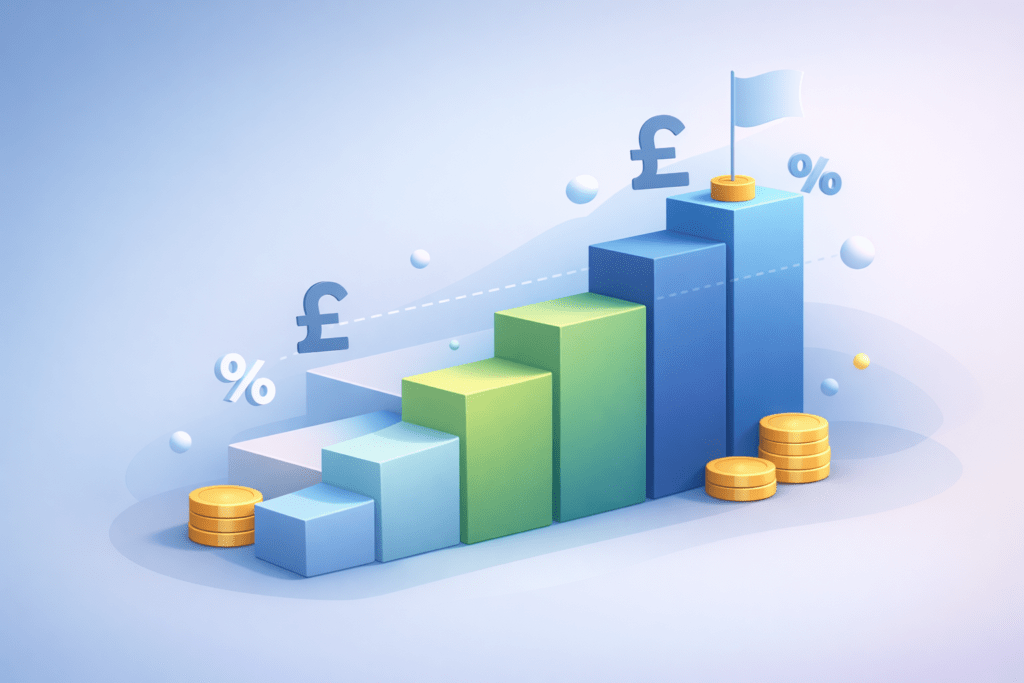
UK income tax bands are progressive thresholds set by HMRC that determine how much tax is charged on different portions of an individual’s income, with rates increasing as taxable income rises above the Personal Allowance.
UK Income Tax Bands (England, Wales & NI – 2025/26)
Income Tax Rates and Thresholds
| Band | Taxable Income | Tax Rate |
|---|---|---|
| Personal Allowance | Up to £12,570 | 0% |
| Basic Rate | £12,571 – £50,270 | 20% |
| Higher Rate | £50,271 – £125,140 | 40% |
| Additional Rate | Over £125,140 | 45% |
Rates and thresholds are set by HM Revenue & Customs and apply only to taxable income, not total earnings.
How UK Income Tax Bands Actually Work
A common misconception is that moving into a higher tax band means all income is taxed at a higher rate. This is incorrect.
UK income tax uses a marginal system, meaning:
- Each portion of income is taxed separately
- Higher rates apply only to income above the threshold
- Earlier income remains taxed at lower rates
This structure ensures that earning more never reduces take-home pay.
Example Calculation
Inputs
- Annual income: £60,000
- Personal Allowance: £12,570
Calculation
- £37,700 taxed at 20% = £7,540
- £9,730 taxed at 40% = £3,892
Outcome
- Total income tax: £11,432
- Effective tax rate: 19.1%
Figures exclude National Insurance.
The £100,000 Personal Allowance Taper Explained
Once income exceeds £100,000, the Personal Allowance is reduced:
- £1 lost for every £2 earned above £100,000
- Allowance reaches £0 at £125,140
- Creates an effective 60% marginal tax rate
This is commonly referred to as the £100,000 tax trap and is a major planning issue for higher earners.
What Counts as Taxable Income?
Income tax bands apply to taxable income, including:
- Employment income
- Self-employed profits
- Rental income
- Savings and dividends (with separate allowances)
They do not apply to:
- ISA interest
- Pension withdrawals within tax-free limits
- Certain state benefits
Is This Financially Worth Understanding?
Understanding income tax bands is practically worthwhile if:
- You are near a band threshold (£50k or £100k)
- You expect bonuses, overtime, or pay rises
- You are comparing job offers or contracts
Risks of misunderstanding include:
- Overestimating tax due
- Avoiding pay rises unnecessarily
- Failing to plan around allowance tapering
How This Relates to an Income Tax Calculator
Income tax calculators use these bands to:
- Apply rates progressively
- Estimate marginal vs effective tax
- Model Personal Allowance tapering
Misunderstanding bands is the main reason people distrust calculator outputs. This article exists to remove that confusion.
People Also Ask (PAA) & FAQs
What income is taxed at 40% in the UK?
In England, Wales, and Northern Ireland, income above £50,270 is taxed at 40%. Only earnings above that threshold are affected; income below remains taxed at 0% or 20%.
Do tax bands change every year?
Tax bands can change at each Budget, but many thresholds have been frozen until April 2028, increasing tax exposure over time due to fiscal drag.
Why does tax feel higher after £100,000?
Between £100,000 and £125,140, the Personal Allowance is withdrawn, creating a 60% effective marginal rate when combined with higher-rate tax.
Are income tax bands the same across the UK?
No. Scotland sets its own income tax bands and rates. England, Wales, and Northern Ireland share the same structure.
Do income tax bands include National Insurance?
No. National Insurance is calculated separately using different thresholds and rates and is not part of income tax bands.
Are pension contributions taxed within income tax bands?
Most pension contributions reduce taxable income before tax bands apply, which can prevent higher-rate or allowance taper exposure.
📱 Download the Free UK Tax Calculator Pro on Google Play to instantly estimate your take-home pay, National Insurance, and student loan deductions with 100% HMRC-aligned accuracy.
Seeing how tax bands work in theory is useful, but applying them to real income is easier with an income tax calculator. For higher earners, the £100,000 tax trap shows how allowance tapering interacts with higher-rate tax and changes effective tax rates.- Uses current HMRC income tax bands and rates
- Explains marginal taxation clearly
- Covers allowance tapering above £100,000
- Includes worked examples for clarity
- Excludes Scottish income tax bands
- Does not model National Insurance
- Not tailored to individual tax codes or reliefs
| HMRC accuracy |
|
| Band threshold clarity |
|
| Marginal tax explanation |
|
| £100,000 allowance taper coverage |
|
| Practical examples |
|
| Suitability for financial planning |
|
|
SUMMARY
This guide provides a clear, accurate explanation of UK income tax bands using current thresholds set by HM Revenue & Customs. It is well suited for employees and higher earners seeking to understand marginal tax rates and allowance tapering, but does not replace personalised tax advice. The article correctly explains how progressive tax bands operate, including the distinction between marginal and effective tax rates. It clearly addresses the £100,000 Personal Allowance taper, a common area of misunderstanding, and uses realistic numeric examples aligned with 2025/26 thresholds. |
4.8
|

Other Articles

How the £100,000 Tax Trap Works
Income Tax Calculator (HMRC)