



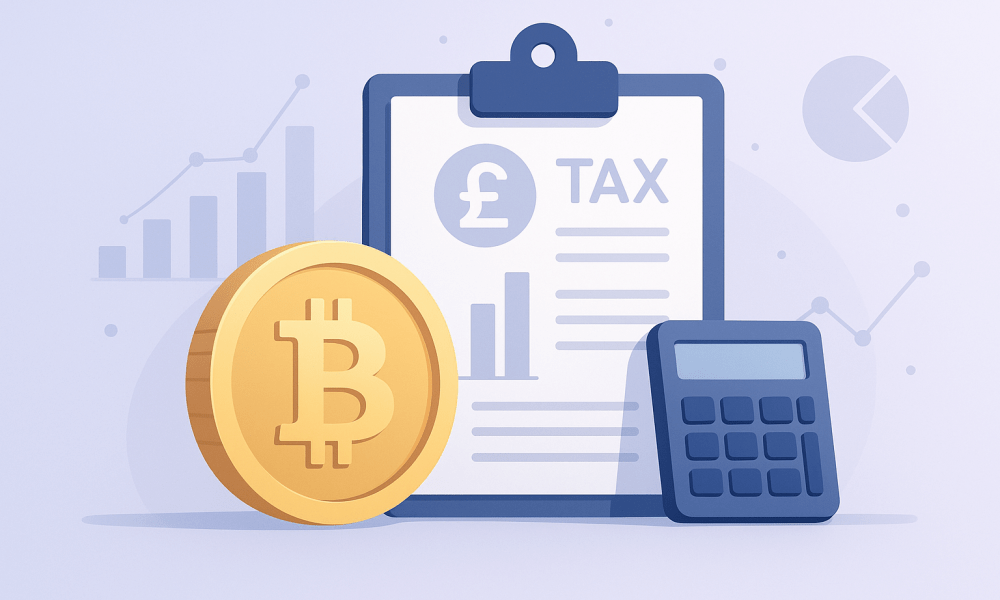
HMRC Cryptocurrency Tax Rules 2025/2026: What Every UK Investor Needs to Know

The era of the “wild west” in cryptocurrency is officially over. For UK investors, digital assets have moved far beyond hobbyist trading—they are a mainstream asset class that directly impacts your personal wealth and your tax bill.
Following the significant tax rate overhauls in the recent Autumn Budget, the rules for the 2025/2026 tax year demand closer attention than ever. HMRC has heavily tightened its data-sharing agreements with major crypto exchanges, meaning absolute accuracy on your Self Assessment tax return is no longer optional. Whether you are an occasional trader or heavily invested in DeFi, understanding the foundation of UK Tax is essential to protect your profits.
Quick Summary for the 2025/2026 Tax Year
- Asset Classification: HMRC classifies cryptocurrency as property, not currency.
- Capital Gains Tax (CGT): Applies when you sell, swap, spend, or gift crypto. Rates are now 18% (Basic Rate) and 24% (Higher/Additional Rate).
- Tax-Free Allowance: The annual CGT allowance remains at £3,000 for the 25/26 tax year.
- Income Tax: Applies when you earn crypto through mining, staking, or salary. Taxed at standard income rates (20%, 40%, or 45%).
- HMRC Surveillance: HMRC actively uses exchange data (from Coinbase, Binance, Kraken, etc.) to issue nudge letters and find undeclared gains.
How Does HMRC Define Cryptocurrency?
HMRC does not consider Bitcoin, Ethereum, or any digital token as legal tender. For tax purposes, they are explicitly classified as property.
To prove your expertise to search engines and tax authorities alike, you should know that HMRC outlines its official stance in the HMRC Cryptoassets Manual (specifically the CRYPTO10000 series). This manual is the primary source of truth for all UK digital asset taxation.
Because crypto is treated as property, your interactions with it will generally fall under one of two distinct tax regimes:
- Selling, swapping, or spending triggers Capital Gains Tax.
- Receiving crypto as a reward or payment triggers UK Income Tax.
When Is Crypto Taxable in the UK?
You only pay Capital Gains Tax when a “disposal event” occurs. Simply holding (HODLing) crypto in a wallet, or transferring it between two wallets that you own, is entirely tax-free.
However, HMRC defines a taxable disposal event as:
- Selling cryptocurrency for fiat currency (like GBP or USD).
- Swapping one cryptocurrency for another (e.g., trading Ethereum for Solana).
- Spending cryptocurrency to purchase goods or services.
- Gifting cryptocurrency to another person (except to your spouse or civil partner).
It is a common misconception that you only owe tax when you “cash out” to pounds sterling in your bank account. If you trade Bitcoin for a stablecoin like USDT, that is a taxable disposal event, and you must calculate the GBP value of the gain at the exact moment of the trade.
Understanding the Section 104 Pool and Matching Rules
Calculating your crypto costs isn’t as simple as matching your first purchase with your first sale. HMRC enforces strict share-matching rules to prevent tax manipulation:
- Same-Day Rule: Tokens bought and sold on the same day are matched together.
- Bed and Breakfasting Rule: Tokens sold and repurchased within 30 days are matched together.
- Section 104 Pool: All other tokens of the same type are pooled together, creating an average cost basis for your holdings.
Capital Gains Tax (CGT) Rates 2025/2026
The government recently overhauled capital gains tax. For all disposals made from October 30, 2024, onward—covering the entirety of the 2025/2026 tax year—the tax rates on cryptocurrency have increased.
You must report these gains in your Self Assessment tax return. Before applying these percentages, you can deduct your annual tax-free allowance, which is £3,000.
| Taxpayer Status | Total Taxable Income | New Crypto CGT Rate |
| Basic Rate | Up to £50,270 | 18% |
| Higher Rate | £50,271 to £125,140 | 24% |
| Additional Rate | Over £125,140 | 24% |
Note: If your crypto gains push your total income over the £50,270 threshold, the portion of the gain that crosses into the higher band will be taxed at 24%.
Income Tax on Crypto Earnings
If you are earning cryptocurrency rather than just investing in it, HMRC treats it as income. The GBP value of the tokens on the day you receive them is added to your total annual income and taxed accordingly.
You will pay Income Tax (and potentially National Insurance) on:
- Staking Rewards: Earning yield by locking up tokens on proof-of-stake networks.
- Mining: Receiving block rewards or transaction fees.
- Airdrops: If received in exchange for performing a service or action (purely random, unprompted airdrops are sometimes exempt, but this is rare).
- Salary: Getting paid in crypto by an employer or client.
The Double Tax Trap: If you receive staking rewards, you pay Income Tax on their value upon receipt. If you hold those rewarded tokens and they increase in value before you sell them, you will also pay Capital Gains Tax on the price difference.
Record Keeping: A Strict Legal Requirement
Under HMRC Rules & Compliance, investors are legally required to keep meticulous records of their crypto transactions for at least six years.
You must log:
- The exact date and time of every transaction.
- The type and quantity of the cryptocurrency.
- The GBP value at the time of the transaction.
- Any associated transaction fees, gas fees, or exchange commissions.
- Wallet addresses and exchange records.
Attempting to do this manually on a spreadsheet is nearly impossible for high-volume traders. Utilizing dedicated Tax Calculators & Tools (like Koinly, Recap, or CoinTracker) is highly recommended to automate Section 104 pooling and generate HMRC-compliant reports.
Can You Offset Crypto Losses?
Yes, and this is one of the most vital Tax Planning & Strategies available to UK investors.
If you sell a cryptocurrency for less than you bought it for, you realize a capital loss. You can deduct these losses from your capital gains in the same tax year, effectively lowering your tax bill.
If your losses exceed your gains, you can carry those losses forward into future tax years indefinitely—but you must report the loss to HMRC within four years of the end of the tax year in which it occurred.
Furthermore, if a token you own goes to zero (like a collapsed project or a rug-pull), you can file a Negligible Value Claim with HMRC to officially register it as a loss, allowing you to offset it against successful investments.
How HMRC Treats DeFi (Decentralized Finance)
DeFi taxation remains one of the most complex areas of UK crypto law. Participating in liquidity pools, lending protocols, or yield farming rarely has a one-size-fits-all answer.
HMRC looks deeply into the “substance” of a DeFi transaction. For example:
- Liquidity Pools: Providing liquidity often requires trading your tokens for a Liquidity Provider (LP) token. HMRC views this exchange of tokens as a taxable disposal subject to CGT.
- DeFi Lending: Depending on how the smart contract is structured, lending your crypto might be viewed as parting with the beneficial ownership, which is another CGT event.
If you are highly active in the DeFi space, using specialized tax software and consulting an accountant is non-negotiable.
HMRC Data Sharing and “Nudge Letters”
If you believe your cryptocurrency transactions are anonymous, you are mistaken. To stay ahead of the curve, keep an eye on Tax News & Updates.
HMRC has established robust data-sharing agreements with centralized exchanges operating in the UK (such as Coinbase, Binance, eToro, and Kraken). Furthermore, under the OECD’s Crypto-Asset Reporting Framework (CARF), global tax authorities are now sharing cross-border transaction data seamlessly.
HMRC regularly sends out “nudge letters” to thousands of UK taxpayers. These letters inform the taxpayer that HMRC knows they hold digital assets and urges them to review their past Self Assessment returns. Ignoring a nudge letter can lead to severe financial penalties or, in cases of deliberate evasion, criminal prosecution.
Real-World Scenario: Calculating the New 2025/2026 Rates
Let’s look at exactly how the new 18% and 24% rates apply in the real world.
The Setup:
Alex buys 1 BTC in 2023 for £20,000. In February 2026, he sells the 1 BTC for £35,000.
Alex also earns £60,000 a year from his day job, placing him in the Higher Rate income tax bracket.
The Calculation:
- Total Gain: £35,000 (Sale Price) – £20,000 (Purchase Price) = £15,000 Capital Gain.
- Apply Allowance: £15,000 – £3,000 (Annual CGT Allowance) = £12,000 Taxable Gain.
- Apply Tax Rate: Because Alex earns over £50,270 from his job, his crypto gain is taxed at the higher rate of 24%.
- Final Bill: £12,000 x 24% = £2,880 Capital Gains Tax owed to HMRC.
If Alex only earned £30,000 from his day job, he would be a Basic Rate taxpayer. His £12,000 taxable gain would comfortably sit within his remaining basic rate band, meaning he would only be taxed at 18%, resulting in a tax bill of £2,160.
Cryptocurrency is an exciting asset class, but HMRC treats it with the exact same rigor as traditional stocks or real estate. The reduction of the tax-free allowance to just £3,000 and the increase in CGT rates to 18% and 24% means thousands of casual investors will now cross the threshold into owing tax.
Keep immaculate records, report your gains and income accurately, and proactively claim your losses. Understanding the rules today ensures you keep the maximum amount of your profits tomorrow.
FAQs
1. Do I pay tax when transferring crypto between my own wallets?
No. Moving cryptocurrency between two wallets or exchanges that you personally own is not a taxable disposal. However, you must keep records of the transfer to prove to HMRC that a sale did not occur.
2. How does HMRC actually know about my crypto?
HMRC receives bulk data directly from centralized exchanges like Coinbase and Kraken. They cross-reference this data with your Self Assessment tax returns to spot discrepancies.
3. Can I avoid UK tax by using a foreign crypto exchange?
No. If you are a UK tax resident, you are legally required to pay tax on your worldwide income and gains. It does not matter if the exchange is based in the Bahamas or the United States; the UK tax rules still apply.
4. Do I need to report my crypto if I lost money overall?
Yes, it is highly beneficial to do so. Reporting your capital losses to HMRC allows you to offset those losses against future gains, which can save you thousands of pounds in tax in subsequent years.
5. I can’t afford my crypto tax bill, what do I do?
If you have a tax bill you cannot pay, you should immediately contact HMRC to set up a “Time to Pay” arrangement. Ignoring the bill will result in steep late-payment penalties.

Other Articles
2026 British Minimum Wage Rates by Age – Official Hourly Breakdown
NatWest ISA Review 2026: Is It the Right Home for Your Money?